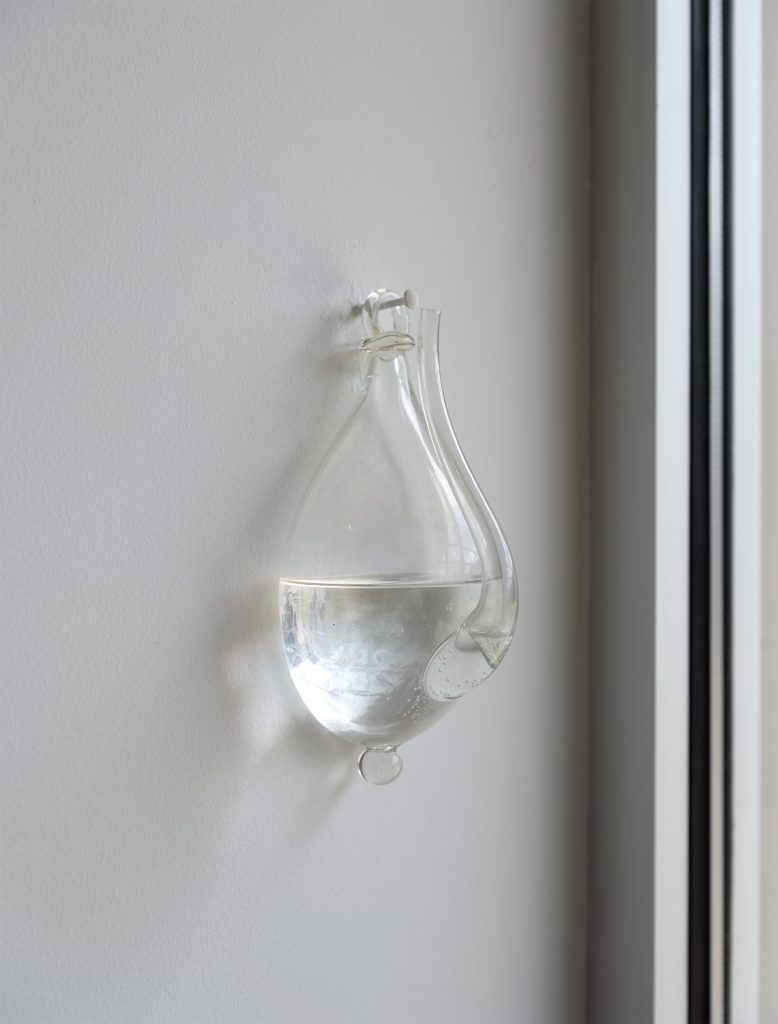
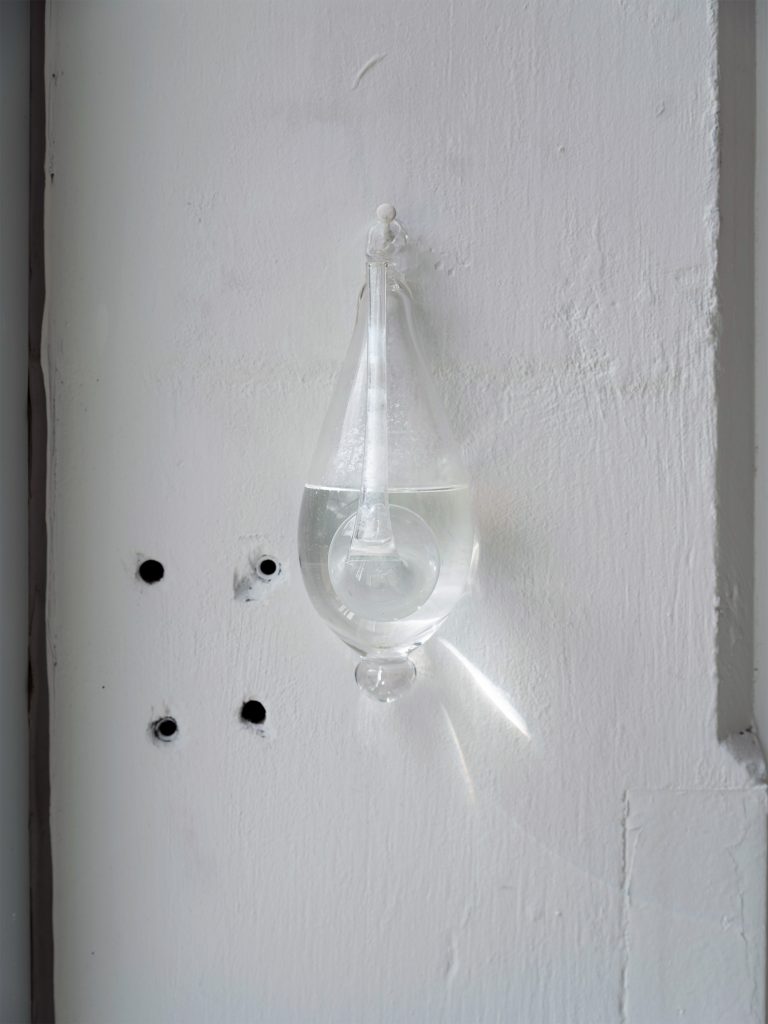
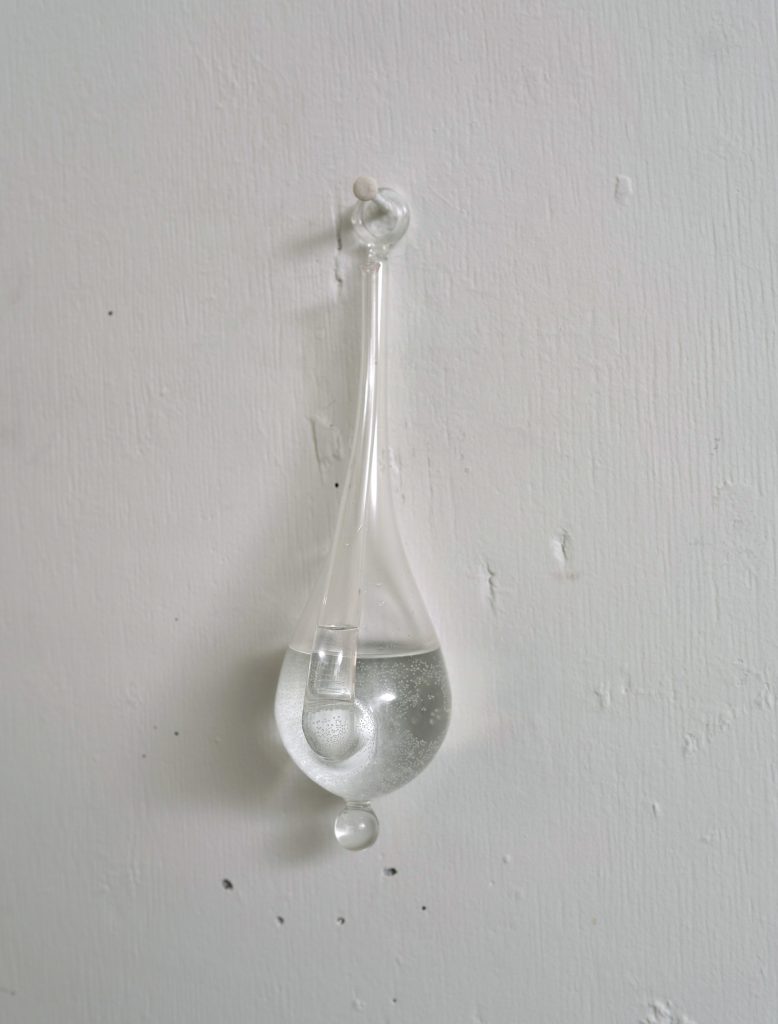
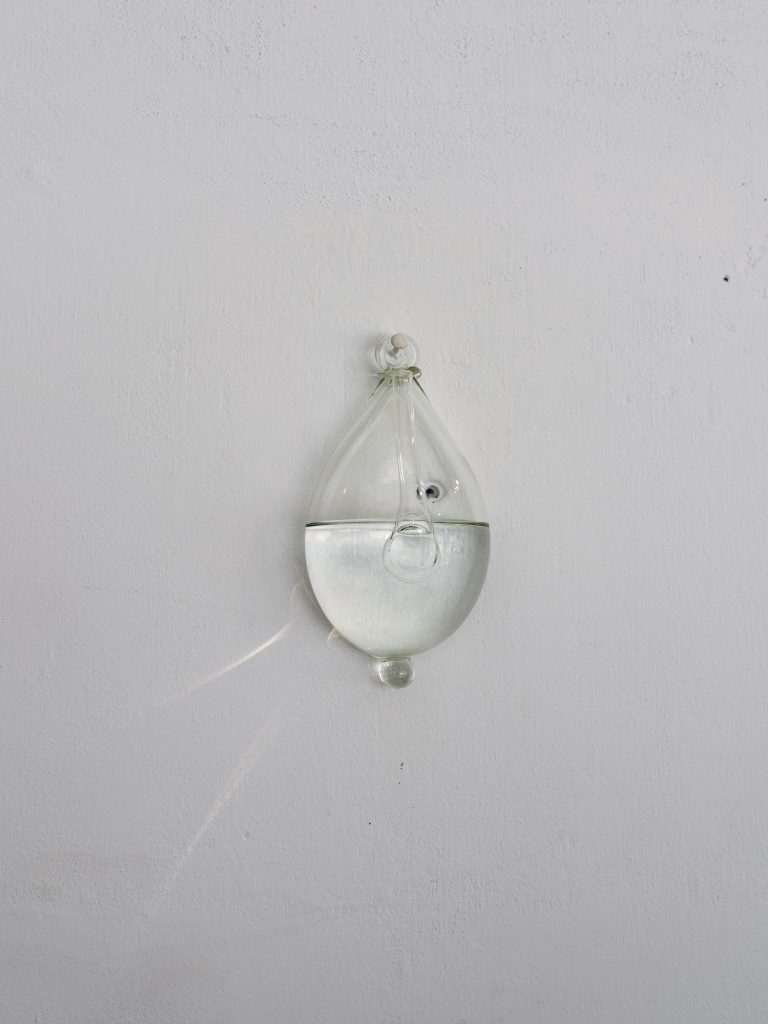
In 1832, a small water vessel was discovered in Goethe’s bedroom just after his death. The instrument, an imprecise water barometer, which responded to changes in air pressure, was mistakenly attributed to Goethe in Germany, who was fascinated by meteorology throughout his life, having a reputation there as a scientist and intellect. Already known in the Netherlands as a donderglas, the instrument had been developed by the local glass blowers of Liège in the early 17th century, predating the first mercury barometer by Torricelli, who encountered these instruments through correspondence networks. As its popularity spread, the naming of the instrument, often used to assert attribution, became a tool for commodification by building a mythic provenance– not only towards Goethe, but also to the Pilgrims who were said to have carried it across the Atlantic. In this way, the instrument inverts invention from genius towards craft, where the name becomes a singular instance of an otherwise endless and distributed folk variation.
Goethe Glass
2024
Glass barometer, water
Le baromètre Liegeois
2024
Glass barometer, water
Pilgrim Glass
2024
Glass barometer, water
Donderglas
2024
Glass barometer, water
photos by Gordon Stillman